

Like any public place with a high traffic of people daily, hospitals also tend to get dirty and are full of bacteria that can threaten our physical integrity, making the cleaning and disinfection work must be arduous and constant in order to keep the place as neat as possible.
Over time, if we are not careful, we can neglect certain areas of the medical center which can be points of risk for visitors, allowing them to contract any disease or unwanted infection, for this reason, throughout this guide we will review what are the places where you should be more careful when carrying out the cleaning, how regular and recurrent should be the same and what products or cleaning methods are the most effective in this process. Read on!
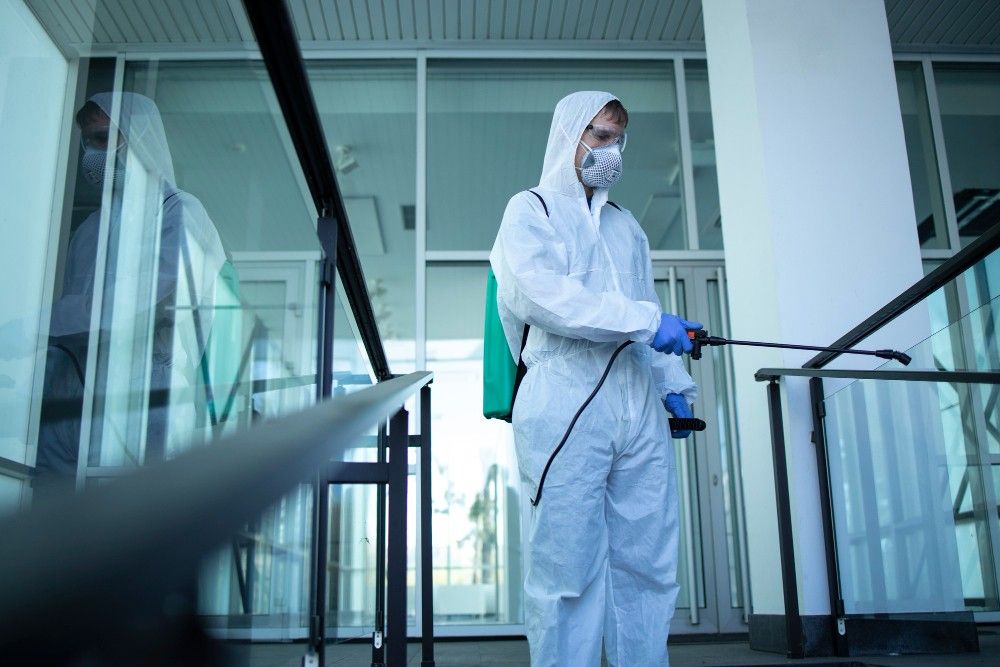
What products are needed for hospital cleaning and disinfection?
Clearly, since we are talking about a health center which must have the deepest possible cleaning, all the elements and utensils used during the sanitation process of the area must be professional, therefore, the most suitable would be the non-woven wipes and towels, also known as TNT, biocidal disinfectants with registration which will guarantee their handling for cleaning purposes, and finally a variety of common products that are usually used in any home or hotel, such as conventional disinfectants, tools and products such as gloves and masks that guarantee the protection of those in charge of this area.
In addition to this, it is important to note that transport carts will be very useful to facilitate the movement of these resources and implements throughout the facilities.
How often should hospital facilities be cleaned and disinfected?
This aspect is determined by the type of work or activities carried out at the site. If it is a social or administrative area where medical work is not commonly performed, cleaning can be superficial to ensure the cleanliness of the environment. If the area is an operating room or a patient’s room, it should have a much deeper hygiene using a variety of cleaning items to ensure the safety of the place.
Cleaning, in turn, can be divided into two types, on the one hand there is routine cleaning, which is the one that is performed every day to ensure the good presence of the hospital with basic techniques and products; and on the other hand there is terminal cleaning, generally used in areas with a high medical activity such as an operating room, being much more intense and complete than the first mentioned.

How are the different areas of hospitals classified?
As we suggested before, hospitals usually divide their areas in order to have an idea of the cleaning to be performed based on the type of activity and the frequency with which they are attended. Thus, these areas are divided into low-risk, medium-risk and critical or high-risk areas, therefore, we will provide a series of fundamental aspects to determine and distinguish each of these areas:
Low risk areas are those in which the presence of bacteria in the environment ranges approximately 20%, this being the case of areas for administrative or social work, either a cafeteria, waiting room, hallway, secretariat, management, among others.
Consecutive medium-risk areas have a load that exceeds 20% but does not exceed 60%, such as the doctor’s offices in the medical center where rehabilitation, care and treatment activities are carried out.
Finally, critical areas are those that exceed 60% of the presence of bacteria in the environment, either an operating room, an isolation room, among others. The terminal type of cleaning should be applied.
General hygiene recommendations in hospitals
Having identified the various risk areas, we will proceed to provide you with a series of tips and professional recommendations for hospital hygiene:
Collect any organic matter that may exist on surfaces or floors in the immediate vicinity as a first hygienic measure.
Avoid dry cleaning, it should always be done wet regardless of whether it is sweeping, scrubbing or simply a superficial cleaning with towels, therefore, it is important to use TNT towels or non-woven fabric.
As with all areas, all utensils and tools used during cleaning should be disinfected and thoroughly washed after use.
In the area to be cleaned, there should be no ventilation currents that can alter the position of dirt and bacteria, this will make cleaning a more difficult task.
Empty product containers should be kept and disposed of in special containers.
Training and protection of cleaning personnel
Cleaning tasks cannot be carried out by just anyone within the facility, much less those working with patients. There must be personnel exclusively prepared to perform this task who have received the corresponding training and have the most optimal tools and techniques to be able to perform good hygiene tasks in the medical center.
Aspects such as uniforms and personal protective equipment such as masks, gloves, shoe covers, hair caps, among others, should be used if the area requires it.

Cleaning and disinfection of the surgical and operating room area
Being a high-risk place with a high presence of bacteria and dirt due to the most complex tasks in terms of medicine, it is necessary that the techniques and products used are of the highest level in order to carry out a thorough terminal cleaning to ensure the safety of the site.
Room cleaning and disinfection
At each admission or discharge to the rooms, the cleaning will be carried out thoroughly and specific techniques will be used to prevent the passage of contamination from other areas of the hospital. Cleaning carts should not be moved within the area to avoid the aforementioned, terminal cleaning is also carried out in these rooms.
Cleaning and disinfection of common areas
Whether corridors, reception or waiting areas, they are considered low risk, for this reason, cleaning will not require advanced techniques to eliminate bacteria, but high quality products should still be used to ensure that they are eliminated in their entirety and reduce risks within the hospital.
Cleaning and disinfection of the laundry area
Like the rooms, the laundry should have a special type of cleaning with techniques designed specifically for this area, and the uniforms of the medical center should be sanitized before reaching this area.
Cleaning and disinfection of sanitary transport
The cleaning transport carts are found in each and every one of the areas, with the exception of some very specific ones. For this reason, it is essential to thoroughly clean them after each working day and particularly after transporting an infectious patient or one with a high bacterial load.


